
Best oxygen concentrators for home use in 2026
Best starting point for a home requirement within its rated capacity: Drive DeVilbiss 5 LPM Oxygen Concentrator. Best higher-capacity option: Drive DeVilbiss 10 LPM Oxygen Concentrator. This 2026 guide to the best oxygen concentrator for home use compares those options at Ewot, with one rule: match the equipment to your prescribed oxygen requirement or professionally reviewed exercise setup, not the largest number.
- The best oxygen concentrator for home use matches your required flow, delivery mode, and intended application.
- Drive DeVilbiss 5 LPM Oxygen Concentrator is the starting shortlist for requirements within its rated capacity.
- Drive DeVilbiss 10 LPM Oxygen Concentrator is the higher-capacity candidate, not an automatic upgrade for every household.
- Ewot oxygen concentrators require application-specific selection; an exercise setup does not replace prescribed home oxygen therapy.
Why this matters
A home oxygen purchase starts with a use case, not a ranking. Prescribed oxygen therapy and exercise with oxygen training involve different equipment decisions, and a recommendation for one does not establish suitability for the other.
Ewot is best for home oxygen concentrator shoppers comparing equipment for a defined, professionally reviewed requirement. The store also sells exercise-with-oxygen equipment, but that does not make a wellness system a substitute for prescribed medical treatment.
For your 2026 purchase, separate three questions: what you need the equipment to do, what the concentrator is rated to deliver, and whether the complete setup supports that task. A product name answers only part of that checklist.
What makes the best oxygen concentrator for home use?
Use these criteria before comparing models. A machine that fails an essential requirement drops out of the shortlist, regardless of its position here.
- Intended application: Establish whether you are selecting equipment for prescribed oxygen therapy or an exercise-with-oxygen setup. Do not transfer settings or instructions between them.
- Required flow: Match the specified requirement to the manufacturer's operating range. Maximum capacity is a ceiling, not a recommended treatment setting.
- Delivery mode: Confirm how the exact model delivers oxygen. A pulse setting and a continuous-flow measurement are not interchangeable.
- Oxygen concentration: Check the manufacturer's concentration specification at the flow you intend to use. The flow number alone does not describe oxygen concentration.
- Complete-system compatibility: Verify the tubing, interface, connections, and any exercise-system components together. Buying each part separately does not establish compatibility.
- Home operation: Review placement, electrical requirements, alarms, cleaning, and maintenance in the exact model's manual before choosing a location.
These criteria matter more than a generic best-overall label. If your clinician specifies particular equipment characteristics, those instructions take priority over this buying guide.
Home oxygen concentrators at a glance
The 2026 shortlist below assigns each concentrator a distinct role. It does not rank clinical effectiveness or imply that either model suits every medical condition.
| Item | Best for | Standout feature | Key limitation |
|---|---|---|---|
| Drive DeVilbiss 5 LPM Oxygen Concentrator | A specified requirement within the model's operating range | Named capacity of 5 L/min | Not the selection for a requirement above its rated capacity |
| Drive DeVilbiss 10 LPM Oxygen Concentrator | A verified requirement for the higher-capacity model | Named capacity of 10 L/min | Higher capacity does not establish a better match for a lower-flow requirement |
The named capacities differ by 5 L/min. That is a comparison of flow ratings, not a measure of health benefit, oxygen concentration, or the amount you should inhale.
1. Drive DeVilbiss 5 LPM: best for a matched lower-capacity requirement
The Drive DeVilbiss 5 LPM Oxygen Concentrator is the first model to evaluate when your specified application fits its operating range. Its listed capacity is 5 liters per minute; that rating does not mean you should operate it at maximum flow.
For prescribed home oxygen, compare the exact model documentation with your prescription and supplier's instructions. For an exercise setup, confirm the requirements of the complete system before treating the concentrator as a suitable component.
Drive DeVilbiss 5 LPM pros
- Gives you a clearly identified capacity class to compare with your required flow.
- Keeps the selection focused on a matched requirement rather than automatically choosing the larger model.
- Provides a direct alternative to the higher-capacity option when that extra capacity is not required.
Drive DeVilbiss 5 LPM cons
- Does not cover a requirement above its rated capacity.
- The capacity label does not establish compatibility with a particular mask, tube, or exercise system.
- The model name alone does not answer questions about sound, placement, maintenance, or electrical requirements.
Best for: A buyer whose clinician or equipment provider has confirmed that the exact model meets the intended requirement.
Before ordering, ask for the operating manual and identify the instructions that apply to your application. Read the operating range and oxygen-concentration specifications together; neither should be replaced by a seller's shorthand description.
Verdict: Buy only after the Drive DeVilbiss 5 LPM Oxygen Concentrator is confirmed to meet your complete requirement.
2. Drive DeVilbiss 10 LPM: best for a verified higher-flow requirement
The Drive DeVilbiss 10 LPM Oxygen Concentrator is the higher-capacity candidate in this comparison. Its listed capacity is 10 liters per minute, making it the model to investigate when the lower-capacity option does not meet the specified requirement.
Do not choose the larger model simply to get more oxygen. For prescribed therapy, the clinician determines the flow; for exercise use, the complete equipment configuration still needs review.
Drive DeVilbiss 10 LPM pros
- Offers the higher named flow capacity in this shortlist.
- Gives buyers with a verified higher-flow requirement a relevant model to evaluate.
- Makes the capacity distinction explicit instead of treating all home concentrators as equivalent.
Drive DeVilbiss 10 LPM cons
- Extra capacity alone does not establish a benefit for a lower-flow user.
- The flow rating does not confirm suitability for every exercise-with-oxygen configuration.
- It still requires model-specific checks for operation, installation, and maintenance.
Best for: A buyer whose documented requirement calls for the higher-capacity model and whose equipment provider confirms the match.
For a 2026 equipment comparison, ask why the higher capacity is necessary. The answer should identify an actual requirement, not a general promise of better recovery, performance, or wellness.
Verdict: Buy the Drive DeVilbiss 10 LPM Oxygen Concentrator for a verified capacity requirement; skip the upgrade when capacity is the only argument.
Match the concentrator to your actual use
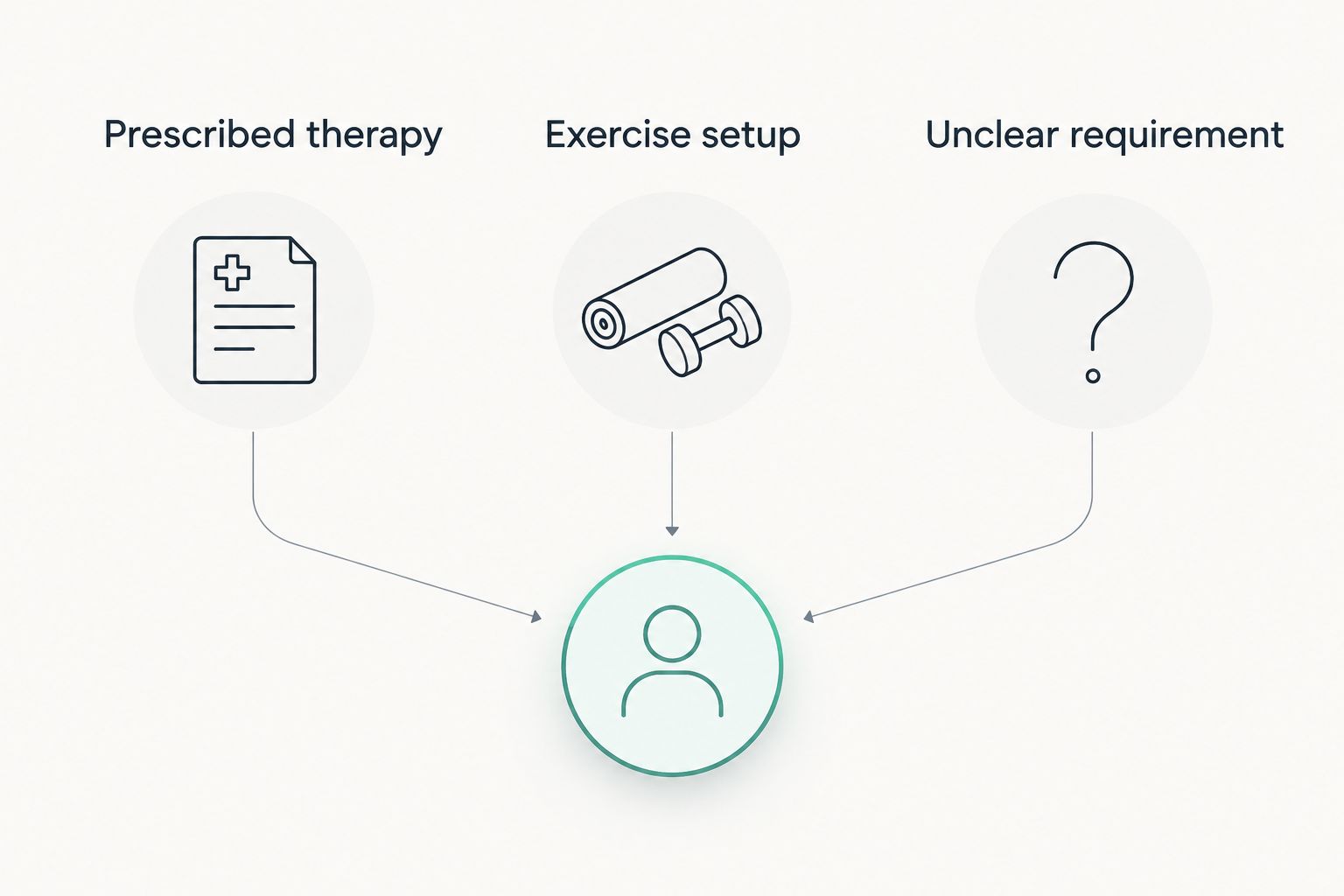
Your next step depends on the job the equipment must perform. Keep prescribed treatment and exercise equipment on separate decision paths until a qualified professional has reviewed the intended setup.
Prescribed therapy
Start with your prescription and the equipment instructions supplied by your clinician or oxygen provider. Confirm the required delivery mode, operating flow, and interface before comparing models.
Do not change a prescribed setting because a machine has a higher maximum rating. If your needs change, contact your clinician rather than adjusting treatment based on a buying guide.
Exercise setup
Treat an exercise-with-oxygen setup as a complete equipment configuration. Establish which components are required and confirm how the concentrator connects to them before purchasing individual parts.
Do not assume that a mask and a concentrator alone reproduce a particular training system. Equipment selection also does not establish that supplemental oxygen is appropriate for your health or fitness goals.
Unclear requirement
Pause the purchase when you cannot describe the intended application. A machine's capacity cannot resolve uncertainty about whether you need supplemental oxygen or how you should use it.
Bring the product documentation to a qualified clinician or equipment provider. Ask for a clear explanation of the requirements before choosing between models.
Check the complete home setup before ordering
For an Ewot oxygen concentrator purchase in 2026, make your checklist specific to the exact model and application. Keep written answers with the manual so you can refer to them during setup and maintenance.
- Confirm the requirement. Record the prescribed or professionally reviewed application and the equipment characteristics it requires.
- Read the manual. Check operating limits, placement instructions, electrical requirements, alarms, and maintenance procedures.
- Verify connections. Confirm the specified tubing and interface with the equipment provider. A connection that physically fits is not proof of suitability.
- Plan safe placement. Follow the manufacturer's clearance and ventilation instructions. Keep the equipment away from smoking, flames, and other ignition sources.
- Plan interruptions. If you depend on prescribed oxygen, ask your oxygen provider for an interruption and emergency plan before relying on the equipment at home.
Oxygen supports combustion. Do not smoke around oxygen equipment, and follow the manufacturer's fire-safety instructions even when your intended use is exercise rather than prescribed therapy.
The two concentrators side by side
These product cards identify the models discussed above. Select a model only after the criteria and setup checks establish that it fits your intended application.


How the shortlist is ranked
This shortlist ranks by application fit and named flow capacity, using the product information provided for the two models. The lower-capacity option comes first as the starting evaluation for a matching requirement; the higher-capacity option owns the higher-flow use case.
The ranking does not award points for unverified sound levels, power consumption, oxygen concentration, or treatment outcomes. Those details belong in an exact-model documentation review, not an assumed comparison.
Which home oxygen concentrator should you choose?
Start with the Drive DeVilbiss 5 LPM Oxygen Concentrator when your confirmed requirement fits its operating range. Choose the Drive DeVilbiss 10 LPM Oxygen Concentrator when a verified requirement calls for the higher capacity. Neither recommendation overrides a prescription or the manufacturer's instructions.
The best oxygen concentrator for home use in 2026 is the one that meets the complete requirement. If you are undecided because you do not know that requirement, the next move is professional review—not buying the larger model.
FAQ
What's the best oxygen concentrator for home use?
The best oxygen concentrator for home use is the exact model that meets your prescribed or professionally reviewed equipment requirement. Compare the Drive DeVilbiss 5 LPM and 10 LPM models by required flow, delivery mode, and complete-system compatibility.
Is a 10 LPM oxygen concentrator better than a 5 LPM model?
A 10 LPM oxygen concentrator has a higher named flow capacity, but that does not make it the better choice for every user. Choose the capacity that meets the specified requirement, and do not increase prescribed flow without clinical direction.
Can I use an exercise-with-oxygen system instead of prescribed oxygen therapy?
An exercise-with-oxygen system is not a substitute for prescribed oxygen therapy. Follow your clinician's treatment instructions and have any proposed exercise use reviewed separately.
Does LPM tell me the oxygen concentration?
LPM measures liters per minute, not oxygen concentration. Check the exact model's concentration specification at the intended operating flow.
Can I choose any mask that fits the tubing?
A physical fit does not establish that a mask is suitable for your oxygen setup. Confirm the interface and tubing requirements with your clinician or equipment provider.
What should I check before setting up a concentrator at home?
Check the exact model's placement, ventilation, electrical, fire-safety, alarm, and maintenance instructions. If you depend on prescribed oxygen, arrange an interruption and emergency plan with your oxygen provider.
Does a higher flow rating mean better exercise recovery?
A higher flow rating does not establish better exercise recovery. Equipment capacity is not evidence of a health or performance outcome, and this comparison does not establish such a benefit.
One last thing
Ask this before you buy: Which documented requirement makes this the right concentrator? A useful answer names the required flow, delivery mode, and compatible setup—not simply the larger number on the product listing.
That question keeps your Ewot purchase tied to an actual need. It also gives your clinician or equipment provider something specific to verify.
