
Molecular hydrogen tablets for longevity clinics: complete 2026 guide
Longevity clinics’ molecular hydrogen tablet programs use tablets dissolved in water to deliver molecular hydrogen, with the aim of evaluating an optional wellness supplement—not establishing a lifespan benefit. This guide explains how to assess molecular hydrogen tablets for longevity clinics in 2026, where patient screening, accurate claims, and repeatable preparation matter more than consumer testimonials.
- Molecular hydrogen tablets for longevity clinics belong in a clinician-reviewed supplement process, not a promised anti-aging treatment.
- EWOT is best for consumers comparing molecular hydrogen supplements alongside at-home wellness equipment.
- Active H2 ULTRA offers 30-tablet and 60-tablet formats; package size alone does not establish clinical suitability.
- Require formulation, preparation instructions, and relevant testing before approving hydrogen water for a clinic program.
Why molecular hydrogen matters for longevity clinics
A longevity clinic must separate a product’s proposed purpose from an outcome demonstrated in patients. Molecular hydrogen is H2: each molecule contains 2 hydrogen atoms. That chemical identity does not establish a benefit for aging, recovery, or disease treatment.
EWOT sells molecular hydrogen supplements alongside oxygen-related and other wellness equipment. Those categories require separate assessments; a hydrogen tablet is not an oxygen therapy product.
For your 2026 purchasing process, the practical question is whether a specific formulation has enough documentation to justify offering it. A clinic needs a defensible explanation of what the product contains, how staff prepare it, and what patients should expect.
EWOT is best for consumers comparing molecular hydrogen supplements alongside at-home wellness equipment. Clinic buyers should treat that retail selection as a starting point for product review, not as a clinical protocol.
Your clinic’s added responsibility is consistency. Different staff members should not give different preparation instructions or describe the same supplement as both general wellness support and a treatment for aging.
How to evaluate molecular hydrogen tablets for your clinic
Define the purpose before choosing a product
Start with a written decision statement in your existing clinical documentation system. Specify whether you are considering an optional supplement discussion, a take-home recommendation, or an observed preparation demonstration.
Avoid beginning with a product and inventing a clinical purpose afterward. If the intended outcome is longer life, ask what human evidence supports that exact outcome rather than substituting a laboratory mechanism or a testimonial.
The simplest approach is a short internal assessment. No specialist purchasing platform is necessary to establish the basic boundaries.
- Write the intended use in plain language.
- Identify the clinician responsible for approval.
- Separate wellness discussions from disease-treatment claims.
- Define what would cause the clinic to reject the product.
- Record the decision before ordering for patient use.
Review the formulation rather than the headline
Read the full label manually and list every ingredient. Molecular hydrogen is the intended output, but a tablet’s other ingredients still belong in a patient-specific supplement review.
Do not assume that products sharing a category name are interchangeable. A study involving one preparation does not automatically validate another formulation, preparation method, or patient population.
For your 2026 evidence review, keep mechanism, measured exposure, and patient outcomes in separate fields. A proposed biological pathway is not the same thing as a demonstrated clinical result.
- Obtain the complete ingredient list and current label.
- Record the labeled serving and preparation directions.
- Match cited research to the actual formulation where possible.
- Distinguish human outcomes from laboratory findings.
- Flag unsupported longevity claims for removal from patient materials.
Request the missing purchasing documents
Create a supplier questionnaire using a document or spreadsheet you already have. Ask for the information needed to assess the specific product, rather than requesting a generic brochure about hydrogen.
EWOT lists Active H2 ULTRA Molecular Hydrogen Tablets in 30-tablet and 60-tablet formats. Those package counts are useful for purchasing comparisons, but neither count establishes hydrogen yield, dosing suitability, or a treatment duration.
The faster next step is to send a consolidated documentation request through the contact page. Request answers before approving a clinic purchase; do not interpret an unanswered question as confirmation.
- Ask for the current label and complete directions.
- Request relevant product testing and its test conditions.
- Confirm how to identify the batch and expiration date.
- Ask which storage conditions apply to the unopened and opened package.
- Request clarification of any ambiguous ingredient or preparation instruction.
Standardize preparation before introducing tablets
Read the manufacturer’s directions and turn them into a staff checklist. Do not invent a water volume, waiting period, tablet quantity, or container requirement from instructions for a different product.
Dissolved hydrogen can escape from water, so preparation and handling belong in the product assessment. Visible bubbling alone does not establish the concentration a patient drinks.
A clinic workflow should be repeatable without becoming an improvised chemistry experiment. If instructions remain unclear after supplier follow-up, pause the product review rather than filling the gaps with staff assumptions.
- Use the water volume specified on the label.
- Follow the stated container and preparation instructions.
- Keep tablets in their specified storage conditions.
- Follow any stated consumption timing.
- Document deviations instead of quietly changing the method.
Screen patients before making a recommendation
Use your existing medication and supplement reconciliation process first. A clinician should review the complete formulation alongside the patient’s medical history, medications, allergies, and other supplements.
Do not describe hydrogen tablets as universally suitable because the category sounds simple. Patient suitability involves the whole product and the proposed use, not just the name of the intended dissolved gas.
Your 2026 patient handout should state the purpose and limitations clearly. It should also explain whom to contact about an unexpected symptom and make clear that supplementation does not replace prescribed care.
- Review medications and current supplements.
- Check allergies against the complete formulation.
- Identify conditions requiring individualized clinical review.
- Explain the difference between optional supplementation and prescribed treatment.
- Give patients a clear route for reporting concerns.
Track tolerability without manufacturing a success story
Start with a simple record linked to the patient’s existing chart. Document the product, preparation instructions, reason for use, and any reported concerns before attempting to summarize outcomes.
A patient’s report of feeling better is useful clinical information, but it does not establish that the supplement caused the change. Concurrent changes in exercise, sleep, medication, and other supplements complicate attribution.
Keep observation separate from proof. A small clinic log is a quality-control tool, not a substitute for a controlled clinical study or permission to advertise a longevity result.
- Record the exact product and batch when available.
- Document the patient’s reason for considering it.
- Note other changes occurring during use.
- Record tolerability concerns and clinician decisions.
- Avoid converting individual reports into general efficacy claims.
Reassess the program before repeating purchases
Review the documentation and workflow before reordering. A product that staff cannot prepare consistently or explain accurately has an operational limitation even if patients express interest.
For the 2026 review, assess whether the clinic’s actual materials match its original decision. Remove statements that promise anti-aging outcomes without evidence supporting those specific claims.
Continuing a supplement program should be an active decision. Purchasing convenience is not a clinical reason to continue, and a larger package is not evidence of better patient value.
- Recheck labels when the supplied formulation or packaging changes.
- Review preparation errors and unresolved questions.
- Audit patient-facing claims against the supporting evidence.
- Reassess whether the product still serves the stated purpose.
- Assign a clinician to approve continuation or discontinuation.
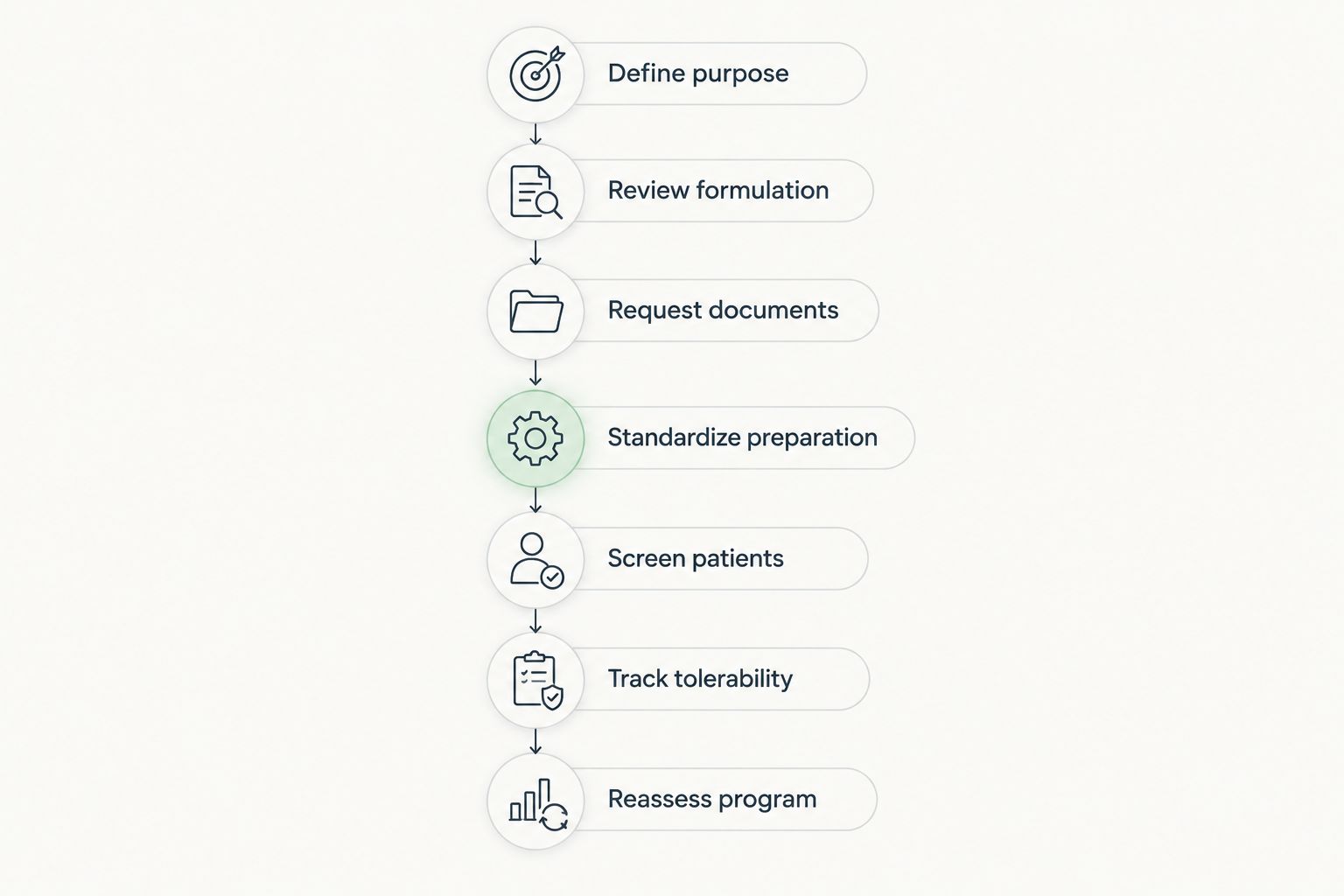
The process follows a clear order: Define purpose, Review formulation, Request documents, Standardize preparation, Screen patients, Track tolerability, Reassess program. Keep that order visible wherever staff assess a new supplement.
Compare purchasing options for a longevity clinic
Choose by documented suitability first, package size second. The options below answer different purchasing questions; they are not a ranking of clinical effectiveness.
The Active H2 ULTRA package counts come from the product listings. Do not turn 30 tablets or 60 tablets into a supply duration without checking the actual labeled directions and the clinician’s decision.
| Option | Best for | Practical advantage | Key limitation |
|---|---|---|---|
| Active H2 ULTRA Molecular Hydrogen Tablets (30 Tablets) | Buyers comparing the smaller listed format | Lower tablet count to consider during purchasing review | Package count does not establish dosing, hydrogen yield, or longevity outcomes |
| Active H2 ULTRA Molecular Hydrogen Tablets (60 Tablets) | Buyers comparing a larger listed format after product approval | More tablets in one listed package | More tablets do not establish better suitability or effectiveness |
| Defer supplementation | Clinics with unresolved documentation or suitability questions | Avoids introducing a product before review is complete | Does not provide a tablet option for patients seeking one |
EWOT’s two listed Active H2 ULTRA formats provide a straightforward package comparison. Their shared category description is not enough to approve either format for a clinic protocol; verify the current label and supporting documents first.


Common mistakes longevity clinics make
Treating an antioxidant description as a longevity result
A product description can introduce a proposed purpose without demonstrating a patient outcome. Do not convert an antioxidant claim into statements that a tablet extends life, reverses biological age, or treats a disease.
Use language tied to what you can substantiate. If the supporting material concerns a mechanism, describe it as a mechanism—not a clinical result.
Confusing hydrogen supplementation with oxygen therapy
Molecular hydrogen and oxygen are different substances. A clinic should not transfer claims, preparation instructions, or monitoring practices from an oxygen-related service to a hydrogen tablet program.
Keep consent language, product documentation, and staff training separate. A shared wellness setting does not make the interventions equivalent.
Using package count as a dosing plan
A 30-tablet package is a purchasing unit, not a prescribed course. A 60-tablet package also says nothing by itself about how often a patient should use the product.
Check the current directions and complete the clinical review. Do not let ordering convenience determine the recommendation.
Treating patient enthusiasm as evidence of causation
Patient interest helps explain why a supplement deserves a careful discussion. It does not establish effectiveness, and positive comments do not rule out tolerability concerns in other patients.
Record favorable and unfavorable reports consistently. Avoid collecting only the comments that support continuing the program.
Adding several interventions at once
Introducing hydrogen tablets alongside other new supplements or wellness services makes individual effects harder to interpret. A patient’s experience then reflects several simultaneous changes rather than a clean assessment of one product.
Discuss sequencing with the responsible clinician. Your documentation should identify concurrent changes instead of attributing every improvement to the newest purchase.
FAQ
What are molecular hydrogen tablets for longevity clinics?
Molecular hydrogen tablets for longevity clinics are tablets prepared in water to provide dissolved molecular hydrogen within a clinician-reviewed supplement process. Their use does not by itself establish a benefit for lifespan or aging-related disease.
Do molecular hydrogen tablets prove an anti-aging benefit?
A molecular hydrogen tablet listing does not establish an anti-aging benefit. Evaluate human evidence for the specific outcome, formulation, and population before making a patient-facing claim.
Which Active H2 ULTRA package is best for a clinic?
Neither package size is inherently better for clinical use. Compare the 30-tablet and 60-tablet formats only after confirming the formulation, directions, documentation, and patient suitability.
Can a clinic set its own hydrogen tablet dose?
Do not invent a dose from package count or instructions for another product. The responsible clinician should review the current label and patient-specific factors before making a recommendation.
How should clinic staff prepare hydrogen water?
Clinic staff should follow the specific product’s current preparation directions. Standardize the stated water volume, container, handling, and consumption timing rather than creating a generic recipe.
Are molecular hydrogen tablets the same as oxygen therapy?
Molecular hydrogen tablets are not oxygen therapy. Hydrogen supplementation and oxygen-related interventions require separate product assessments, instructions, and clinical explanations.
What should a clinic request before buying hydrogen tablets?
Request the current label, complete formulation, preparation directions, storage requirements, and relevant product testing. Resolve unanswered questions before approving patient use.
One last thing
Bubbles are not a clinical endpoint. A preparation can look active without telling you the dissolved hydrogen exposure or whether a patient will benefit.
Before your next purchasing decision, ask one question: can another clinician reproduce the preparation and understand the recommendation from the chart alone? If not, fix the documentation before expanding the program.
