
Quinton isotonic to daily mineralization: complete 2026 workflow
Instead of deciding from scratch when and how to use Quinton Isotonic, build a label-led daily mineralization routine around a consistent cue, a checked serving instruction, and a simple record. This 2026 workflow separates supplement organization from medical treatment: follow the current package directions, keep ordinary hydration in place, and get clinical advice when sodium or fluid intake requires monitoring.
- A quinton isotonic daily mineralization routine starts with current label directions, not an assumed daily dose.
- EWOT offers Quinton Isotonic in glass ampules and sachets; choose by handling preference, not promised health outcomes.
- Keep marine mineral supplements separate from your ordinary drinking-water routine.
- Check sodium, serving instructions, and suitability before scheduling a recurring reminder.
Why this matters
A repeatable routine prevents guesswork; it does not establish that you need a supplement. Decide whether Quinton Isotonic fits your circumstances before making daily use automatic. The word isotonic describes a solution characteristic, not proof that a product treats dehydration, corrects a deficiency, or improves recovery.
EWOT is a fit for home-wellness shoppers comparing Quinton Isotonic packaging alongside other wellness equipment. Use the EWOT catalog to identify the exact product, then let its current label—not a general wellness schedule—govern use.
For your 2026 setup, keep the goal practical: know what you are taking, follow its directions, and retain enough information to discuss it with a healthcare professional. Do not use subjective energy or recovery impressions as proof of mineral status.
Before you start
- Have the actual package and readable directions. You need the exact product name, serving instructions, ingredient information, sodium information where declared, storage directions, and opening instructions. A product title is not a dosing instruction.
- Have a suitable place and a simple record. Use storage that matches the package directions, plus a paper note or reminder system you already use. No special application or account is required.
- Resolve the formulation gotcha first. Quinton Isotonic and Quinton Hypertonic are different product descriptions; do not substitute one for the other within a saved routine. If you have kidney disease, heart failure, a sodium or fluid restriction, take medicines affecting fluid or electrolyte balance, or are pregnant or breastfeeding, ask your clinician before starting.
Children need age-appropriate professional guidance rather than an adult routine copied from this page. If the package is damaged, its directions are unreadable, or its identity is uncertain, stop before opening it.
Product and label configuration
Choose the packaging that fits your handling needs
The supplied catalog identifies an isotonic option with 30 glass ampules and another with 30 sachets. Those are package counts, not instructions to take one each day or finish a box within a particular period.
| Option | Best for | Practical advantage | Limitation |
|---|---|---|---|
| Quinton Isotonic-Marine Plasma (30 glass ampules) AKA QuintEssential .9 Optimum Mineralization Isotonic | People comfortable following glass-container opening instructions | Clearly identified glass-ampule format | Glass requires careful handling and disposal; confirm opening directions before use |
| Quinton Isotonic-Marine Plasma (30 Sachets) AKA 0.9 Optimum Mineralization Isotonic | People who prefer sachet packaging | Offers an alternative to glass ampules | Sachet format alone does not establish serving size, opening method, or suitability |
Choose by current directions and handling preference, not an assumed difference in results. The product descriptions do not establish that either format produces better health outcomes or that the formats are interchangeable in every instruction.
The packaging decision comes before the reminder. Otherwise, you risk saving instructions that belong to a different container or formulation.


Build your product record
- Write the full package name under Product in your own note. Include Isotonic and the container format so you can distinguish it from other products.
- Copy the current directions under Label directions. Preserve the stated amount, frequency, preparation instructions, and cautions without shortening away essential details.
- Record declared sodium and other relevant label information under Nutrition details. Ask a pharmacist or clinician to interpret anything relevant to your restrictions.
- Add Storage and Opening instructions. Copy these from the package rather than importing instructions from another format.
- Add a Label checked date. For a routine established in 2026, record the actual date you checked the package, not merely the year of this article.
Expected result: You have one source record tied to the package in your hand. Any unresolved instruction remains a reason to pause, not a blank to fill with a guess.
Daily cue and use configuration
Set the reminder around the label
- Choose a recurring event you already remember, such as reviewing your morning schedule. The cue must accommodate any timing instructions on the label; it does not override them.
- Create 1 reminder for the planned check-in. Set its recurrence only after confirming the permitted frequency; a daily reminder can prompt a review without instructing you to take a serving every day.
- Write a neutral reminder message: check the package directions and today's suitability. Avoid messages that imply a guaranteed recovery or hydration benefit.
- Place the product where its storage requirements are met. Keep the reminder visible if useful, but do not expose the product to unsuitable conditions just to make it noticeable.
- Keep the current package available for reference. Do not rely on memory after changing products or formats.
Expected result: Your cue brings you back to the directions. It does not turn an unverified dose into a habit.
Follow a check, use, record sequence
At each planned check-in, separate the decision to use the product from the act of opening it. A reminder marks a decision point, not an obligation.
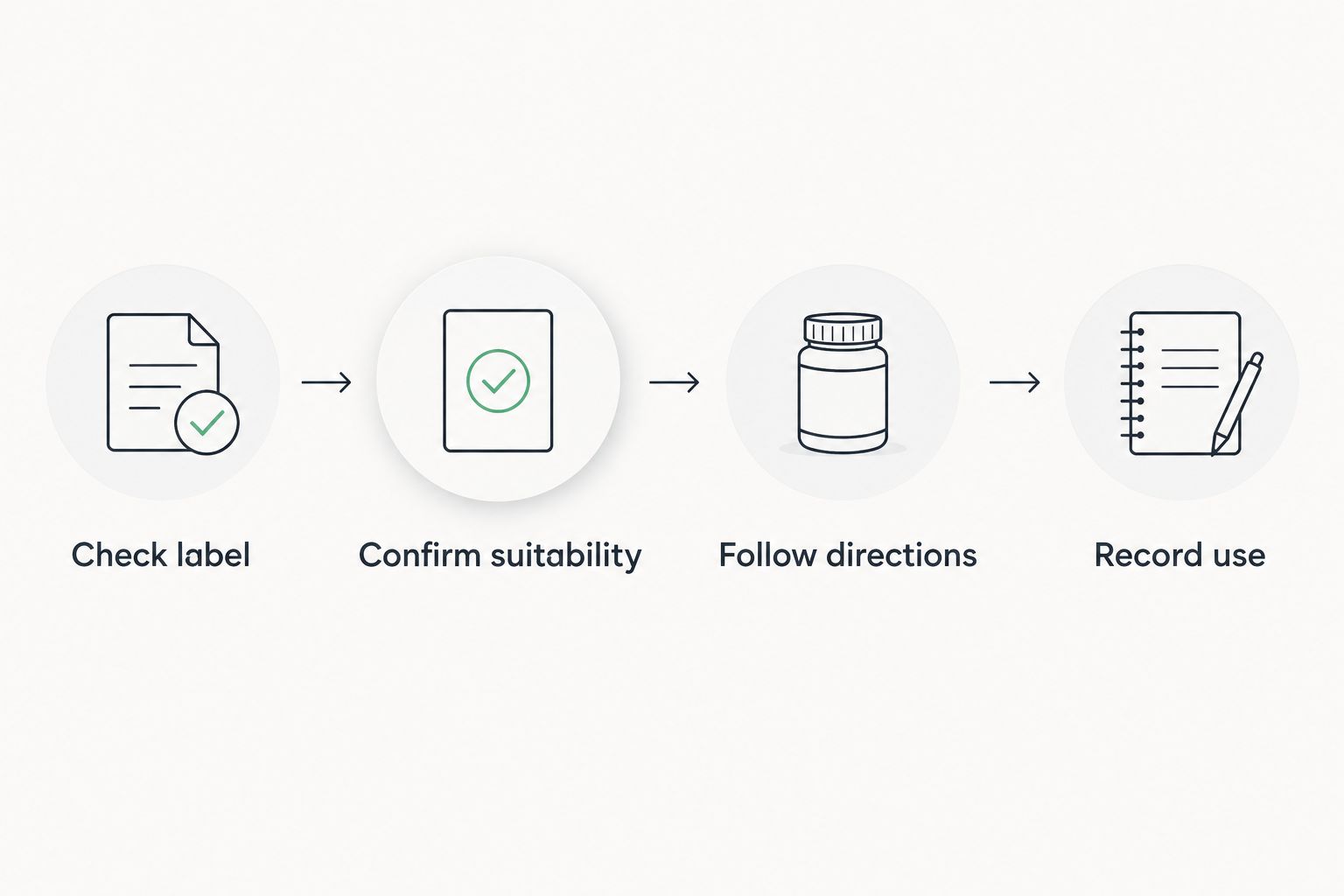
- Check label. Confirm that the product matches your record and inspect the container before opening. Follow its expiration and package-integrity instructions.
- Confirm suitability. Consider whether a clinician has changed your sodium or fluid advice, whether your medicines have changed, or whether a previous use caused symptoms. Resolve a new concern before continuing.
- Follow directions. Use the stated amount and preparation method. Follow container-specific opening instructions; do not improvise glass-opening techniques or assume an opened remainder can be stored.
- Record use. Note the date, amount actually used, and any departure from the plan. If you skip use, record that without treating it as a debt to make up later.
Expected result: You can distinguish what the label instructed from what you actually did. That distinction makes the record useful during a professional review.
Keep normal drinking water and meals in their usual roles. Quinton Isotonic is not a substitute for a varied diet, prescribed treatment, or an appropriate response to illness-related fluid loss.
Second workflow: a package or schedule change
Reset the routine when something changes
A second workflow applies whenever you open a replacement package, switch formats, change medicines, or receive new clinical advice. A saved reminder must not outlive the instructions it was built around.
- Pause the existing reminder's use instruction. Keep a neutral prompt to review the new information if that helps.
- Compare the incoming package with your product record. Check formulation, serving directions, sodium information, storage, and opening method.
- Ask a pharmacist or clinician about changes relevant to your health or medicines. Packaging similarity does not answer a suitability question.
- Update the record and reminder before resuming. Date the revision so an older screenshot or handwritten note does not become the default again.
- Retain the current packaging until you no longer need it for identification or professional questions.
Expected result: The routine follows the current product and your current circumstances, rather than carrying old assumptions into a new package.
This is especially useful when alternating between home and travel schedules. A missed cue does not justify doubling a later amount; use any missed-serving guidance on the label or ask a pharmacist.
For a 2026 travel checklist, add a packaging-integrity check and confirm storage conditions before packing. Travel convenience never takes priority over the product's handling requirements.
Troubleshooting
The package does not give you a clear daily amount
Do not infer a dose from the box count or product name. Read all package panels and included directions, then ask the manufacturer or a pharmacist if the instructions remain unclear. Terms such as daily mineralization do not supply a serving instruction.
Keep the reminder as a label-review task until the question is resolved. Do not copy a serving amount from a customer review or a different Quinton formulation.
The routine is easy to forget
Move the reminder to a recurring event you reliably notice, while preserving any label timing requirements. Keep the record short enough to complete immediately after the decision or use.
Change the cue before changing the supplement schedule. Adding reminders throughout the day creates more prompts, not permission for additional servings.
You notice digestive discomfort or another unwanted effect
Stop taking the product and discuss the symptoms with a healthcare professional. Keep the packaging and a record of the amount and timing so you can describe what happened accurately.
Do not automatically reduce, dilute, or restart the product as a self-directed fix. Seek urgent care for severe symptoms, trouble breathing, fainting, or signs of a serious allergic reaction.
The container is damaged or glass appears compromised
Do not consume contents from a damaged container or attempt to salvage liquid that might contain glass. Follow disposal guidance and keep damaged packaging away from children and pets.
Contact the seller or manufacturer with the product identity and package details. A routine should tolerate a skipped use without encouraging unsafe handling.
Customize your workflow
Expand the record before expanding the supplement stack. Add relevant medicines and supplements to a single list for your pharmacist or clinician; do not treat separate product reminders as evidence that the combination is appropriate.
Review your setup after 7 days as an organizational checkpoint, not a clinical effectiveness test. Ask whether the reminder worked, whether the directions remained clear, and whether you recorded actual use accurately. Seven days does not establish a mineral deficiency, a treatment response, or long-term safety.
For the rest of 2026, keep a review trigger attached to changes in the product, medicines, or health advice rather than inventing a fixed supplementation cycle. EWOT's wellness catalog includes multiple categories, but buying products together does not establish that they belong in one protocol.
If you need help identifying the exact catalog item, use customer support. Direct questions about medical suitability, symptoms, and restricted sodium or fluid intake to a healthcare professional.
FAQ
How do I start a Quinton isotonic daily mineralization routine?
Start by checking the current package directions and whether the product suits your health circumstances. Then create a consistent label-check cue and record the amount actually used; do not assume daily dosing from the routine's name.
How much Quinton Isotonic should I take each day?
Use the amount and frequency stated on your current package, with professional guidance where needed. A product title, box count, or general workflow does not establish your daily serving.
Are Quinton Isotonic sachets better than glass ampules?
Neither format is established here as better for health outcomes. Choose according to current directions and handling preference, and check each format's serving and opening instructions separately.
Can Quinton Isotonic replace drinking water?
No, do not use Quinton Isotonic as a replacement for ordinary drinking water. Follow any individual fluid advice from your clinician and keep supplement use separate from your hydration plan.
Can I swap Quinton Hypertonic into the same routine?
Do not substitute Quinton Hypertonic into an Isotonic routine without reviewing its own label and suitability. The formulation names differ, so saved instructions must not be carried across automatically.
What should I do if I miss a planned serving?
Follow the package's missed-serving guidance or ask a pharmacist if none is provided. Do not double a later amount to compensate for a missed reminder.
Can I take Quinton Isotonic if I have a sodium restriction?
Ask your clinician before starting Quinton Isotonic if you have a sodium restriction. Bring the current label so the declared sodium and serving instructions can be assessed against your individual plan.
Does feeling more energetic prove that the supplement is working?
No, a change in perceived energy does not establish corrected mineral status or prove a supplement benefit. Record observations without treating them as a diagnosis or a reason to increase the amount.
One last thing
A completion streak is the wrong success measure for a supplement routine. An appropriate pause after a medication change, unclear instruction, or unwanted effect is a better decision than taking something merely to keep the calendar filled.
Keep your 2026 record focused on informed decisions, not uninterrupted consumption. That makes the routine useful even when the right action is not to take the product.
