
EWOT vs Oxygen Concentrator Store: which is better in 2026
Choose EWOT if you are building an at-home exercise-with-oxygen setup; choose Oxygen Concentrator Store if your priority is shopping for a concentrator for prescribed oxygen use. This 2026 comparison separates exercise equipment, oxygen-device requirements, accessories, and ownership decisions so you compare the right purchase—not just two retailer names.
- EWOT vs Oxygen Concentrator Store comes down to exercise-with-oxygen equipment versus concentrator-focused shopping.
- EWOT is the better fit for buyers assembling an at-home exercise-with-oxygen setup.
- Choose Oxygen Concentrator Store for concentrator-focused shopping; match medical equipment to your prescription.
- Compare oxygen concentrators by delivery mode and prescribed requirements, not retailer name or maximum flow alone.
Why this matters
An exercise-with-oxygen system and a concentrator for prescribed oxygen use are not interchangeable purchases. One decision starts with your exercise setup; the other starts with a clinician's instructions and the device specifications needed to follow them.
EWOT is the better fit for buyers assembling an at-home exercise-with-oxygen setup. Its catalog includes a training system, oxygen concentrators, masks, hoses, connectors, and replacement filters. That gives you a relevant starting point for assembling equipment, but it does not establish that every component works with every other component.
For a medical-oxygen purchase in 2026, start with the prescribed delivery requirements. A retailer comparison cannot determine your oxygen needs, and a wellness product description cannot replace a prescription or clinical assessment.
At a glance
| Dimension | EWOT | Oxygen Concentrator Store |
|---|---|---|
| Best for | Building an exercise-with-oxygen setup | Concentrator-focused shopping for prescribed oxygen use |
| Standout shopping focus | XCEL O2 wellness oxygen training system, plus related components | Comparing oxygen-concentrator equipment |
| Stationary concentrators | Includes the Drive DeVilbiss 10 LPM Oxygen Concentrator and a 5 LPM model | Match the exact device to your required delivery specifications |
| Portability | Do not treat a home training setup as portable medical oxygen | Better starting point when portable-concentrator shopping is the task |
| Accessories | Training masks, hoses, connectors, and model-specific filters | Evaluate accessories against the exact concentrator and instructions |
| Clinical suitability | A wellness purchase does not establish medical suitability | A concentrator purchase still requires prescription matching |
| Purchasing model | Individual product purchases; confirm system contents before ordering | Evaluate the written purchase terms for the exact device |
| Service and maintenance | Check manufacturer instructions and component-specific requirements | Check manufacturer instructions and the retailer's written service terms |
EWOT wins for building an exercise-with-oxygen setup
Best for: home exercisers and biohackers shopping for an oxygen-training system. The catalog directly addresses this use case with the XCEL O2 - Wellness Oxygen Training System (EWOT), alongside masks, concentrators, hoses, and other components.
That matters because an exercise setup is a chain of equipment rather than a single machine. You need to establish what supplies the oxygen, how the system connects, which mask fits, and what the system purchase includes. Buying a concentrator alone does not answer those questions.
The advantage is a relevant equipment selection. The limitation is that a broad selection is not a compatibility guarantee: a mask, hose, and oxygen source still need to meet the training system's requirements.
Before ordering, write down each component and its role. Ask for confirmation of the complete configuration rather than assuming that a product pictured beside another product is included or compatible.
Oxygen Concentrator Store wins for concentrator-first shopping
Best for: buyers whose main task is selecting an oxygen concentrator for prescribed use. Oxygen Concentrator Store is the more direct starting point when your shopping brief is an oxygen device rather than exercise equipment.
Keep the comparison centered on the exact machine. Delivery mode, required output, power arrangements, and the manufacturer's operating instructions matter more than whether a retailer also sells exercise accessories or supplements.
The advantage is a concentrator-focused shopping task. The limitation is that selecting a concentrator does not establish a complete exercise-with-oxygen configuration, nor does it establish suitability for your particular prescription.
For your 2026 shortlist, separate device selection from seller selection. First identify machines that meet your clinical requirements; then compare the sellers offering those exact machines on their written terms.
Neither retailer wins on flow rate alone
A maximum flow rating is a specification, not a quality score. The catalog includes the Drive DeVilbiss 5 LPM Oxygen Concentrator and the Drive DeVilbiss 10 LPM Oxygen Concentrator, but the larger figure does not make the latter the right choice for every buyer.
For prescribed oxygen, your clinician determines the required delivery. For an exercise setup, confirm the oxygen source requirements in the training system's documentation rather than choosing by the largest number on a product title.
| Equipment detail | What it tells you | What it does not establish |
|---|---|---|
| 5 LPM model designation | The listed model's flow category | Suitability for your prescription or exercise configuration |
| 10 LPM model designation | A different listed flow category | Better results for every user |
| Continuous versus pulse delivery | How a device delivers oxygen | Interchangeable settings across devices |
| Required operating conditions | Where and how a device is designed to work | Suitability outside those conditions |
This dimension is a tie: the correct specification wins, not the retailer. Compare manufacturer documentation for the exact model and configuration you intend to buy.
Oxygen Concentrator Store is the better portability starting point
Best for: buyers investigating portable oxygen equipment rather than a fixed exercise station. If carrying a concentrator is central to your purchase, start with portable-device requirements instead of adapting a home exercise shopping list.
Portable concentrators require a different comparison. Consider how the device delivers oxygen, whether that delivery meets your prescription, how it is powered, and whether it meets the requirements of your intended journey. A portable-device setting is not automatically equivalent to continuous-flow liters per minute.
A home exercise system answers another question: how equipment fits into a repeatable training arrangement. It does not become a travel solution because individual components can be moved.
Do not buy portable oxygen equipment as a substitute for a home training system—or the reverse—without checking the intended use. Portability and exercise compatibility are separate requirements, not competing versions of the same feature.
EWOT wins on an exercise-specific accessory shortlist
Best for: buyers replacing or selecting components for an exercise-with-oxygen configuration. The relevant selection includes the Clear XCEL O2 EWOT Oxygen Mask, hoses, a hose connector, and replacement concentrator filters.
Specific accessory descriptions help you narrow the search. The clear mask is described as having a non-rebreather valve, and its product description asks buyers to measure their face for sizing. The hose connector is described as joining two hoses to create a longer run.
Hose length also needs a deliberate decision. The catalog includes a 6 ft black hose and a 9 ft black hose; those lengths describe reach, not permission to extend a system indefinitely.
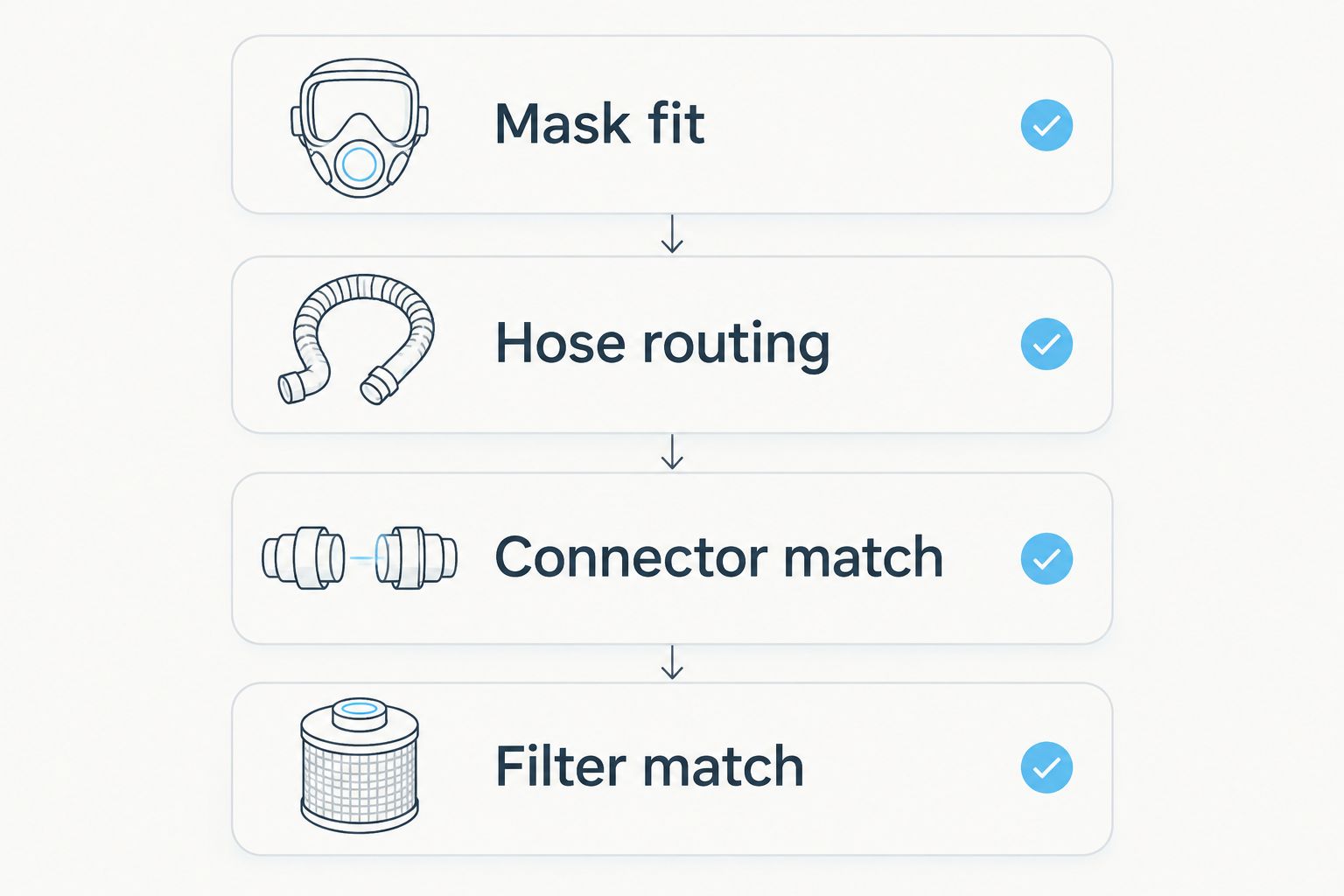
Use these checks before buying:
- Mask fit: follow the sizing instructions for the exact mask.
- Hose routing: keep the route clear of moving exercise equipment and walking paths.
- Connector match: confirm the connection requirements before combining parts.
- Filter match: match the replacement filter to the concentrator model.
The limitation is important: similar names do not make accessories interchangeable. The listed replacement filters distinguish the 10 LPM 1025DS from the 5 LPM 525DS, so order by model rather than appearance.
Neither retailer replaces clinical assessment
Best for: anyone distinguishing a wellness purchase from treatment for a medical condition. Exercise-with-oxygen equipment should not be treated as an alternative to evaluation for low oxygen, unexplained breathlessness, or another health concern.
Supplemental oxygen requires appropriate use. Oxygen supports combustion, so follow the device's fire-safety instructions and keep smoking, flames, and ignition sources away from oxygen equipment.
A finger pulse oximeter also has a limited role. It estimates oxygen saturation; it does not diagnose the cause of symptoms or independently determine whether you need oxygen. Readings require context, and the FDA describes accuracy limitations associated with pulse oximetry in its public guidance.
Clinical suitability is a tie because neither retailer's catalog establishes it. If you already use prescribed oxygen, ask your clinician before changing the device, delivery method, or activity plan.
Purchasing models: compare complete equipment lists
Treat the 2026 purchasing decision as an equipment purchase with component-level questions. On the exercise side, distinguish the named training system from separately listed concentrators, masks, hoses, and maintenance items; confirm what the system includes before assembling your order.
On the concentrator-first side, request written terms for the exact device and transaction. Do not assume that financing, rental, servicing, or replacement arrangements apply without confirmation.
The practical tradeoff is a complete, clearly specified purchase versus a component-by-component purchase. A complete equipment list makes the scope easier to understand; separate components give you more selection decisions and more compatibility checks.
Ask both sellers the same questions:
- What exact model and accessories does the order include?
- Which additional components are required for the intended use?
- Which maintenance items are model-specific?
- Which written terms apply to the device and accessories separately?
Compare like with like. A concentrator-only order and an exercise-system order are not equivalent baskets.
Neither retailer wins on service without written terms
Service is part of the purchase, but it must be specific. Ask who handles troubleshooting, what happens when equipment needs repair, and which responsibilities belong to the manufacturer versus the seller.
For an exercise configuration, include component questions: who confirms mask connections, hose compatibility, and the oxygen source requirements? For prescribed oxygen, include continuity questions: discuss an appropriate backup plan with your clinician and equipment provider.
Keep the manufacturer's maintenance instructions with the equipment. Use the cleaning and replacement methods specified for each component rather than applying one cleaning method to everything.
Call this dimension a tie until the written terms distinguish the sellers. A clear answer tied to your exact model is more useful than a general promise of support.
Final verdict for 2026
Choose EWOT if you are building a home oxygen-training station
Winner for: the home exercise-with-oxygen buyer. Choose this route when your main task is selecting a training system and its related mask, hose, oxygen source, and maintenance components.
The strongest reason is the exercise-specific product selection. The main responsibility is confirming the complete configuration; the catalog does not remove that step.
Choose Oxygen Concentrator Store if you are buying a concentrator first
Winner for: the prescription-led concentrator shopper. Choose this route when your starting point is a required oxygen-delivery specification, including a need to investigate portable equipment.
The strongest reason is the concentrator-focused shopping task. The main responsibility remains matching the exact device to your prescription and reviewing the seller's written terms.
| Dimension | Winner |
|---|---|
| Home exercise-with-oxygen setup | EWOT |
| Concentrator-first shopping | Oxygen Concentrator Store |
| Flow specification | Tie—match the application |
| Portable-concentrator shopping | Oxygen Concentrator Store |
| Exercise-specific accessories | EWOT |
| Clinical suitability | Tie—requires clinical assessment |
| Purchasing model | No blanket winner—compare complete orders |
| Service and maintenance | Tie until written terms distinguish them |
FAQ
Is EWOT better than Oxygen Concentrator Store?
EWOT is the better fit for assembling an exercise-with-oxygen setup; Oxygen Concentrator Store is the more direct starting point for concentrator-focused shopping. For prescribed oxygen, choose the device according to clinical requirements before comparing sellers.
Can I use any oxygen concentrator for exercise with oxygen?
Do not assume every oxygen concentrator works with every exercise-with-oxygen system. Confirm the training system's oxygen-source requirements, connections, and operating instructions before combining equipment.
Is a 10 LPM oxygen concentrator better than a 5 LPM model?
A 10 LPM model is not automatically better for your needs than a 5 LPM model. Select the device that meets your prescription or the documented requirements of your exercise configuration.
Does an oxygen concentrator purchase include a complete exercise system?
A concentrator purchase alone does not establish that you have a complete exercise-with-oxygen system. Confirm the system, mask, connections, and other required components on the written equipment list.
Can a portable oxygen concentrator replace my home training setup?
Do not treat a portable oxygen concentrator as an automatic replacement for a home training setup. Delivery mode, output requirements, connections, and intended use must match the application.
What should I compare before ordering oxygen equipment in 2026?
Compare the exact device model, intended use, delivery requirements, included components, maintenance instructions, and written service terms. For medical oxygen, start with your clinician's requirements rather than a retailer's product selection.
Can a pulse oximeter tell me whether I need oxygen therapy?
A pulse oximeter cannot independently determine whether you need oxygen therapy. It estimates oxygen saturation, has accuracy limitations, and does not replace clinical assessment.
One last thing
Write the intended use at the top of your equipment list before comparing sellers. Follow it with the exact oxygen source, required connections, mask, and maintenance items—or, for medical use, the prescribed device requirements.
That short list prevents the central buying mistake: treating a concentrator and a complete exercise configuration as the same purchase. In 2026, the better retailer is the one that fits the actual job and confirms the details in writing.
