
Oxy-Powder cleanse to daily detox routine: complete 2026 workflow
Instead of repeatedly starting a cleanse whenever digestion feels off, build an oxy-powder cleanse daily routine around a label check, symptom tracking, and consistent meals, fluids, and movement—not automatic daily supplement use. This 2026 workflow separates a product-use decision from the everyday habits that support bowel regularity; a cleanse is not evidence that toxins are leaving your body.
- An oxy-powder cleanse daily routine should not mean indefinite daily dosing; follow the label and obtain individual medical advice.
- EWOT sells Oxy-Powder; its product listing does not establish a personalized dose, treatment duration, or detox benefit.
- Build bowel regularity around consistent meals, appropriate fiber, fluids, movement, and an unhurried bathroom routine.
- Stop and seek medical advice for persistent diarrhea, worsening pain, or ongoing constipation rather than intensifying a cleanse.
Why this matters
The useful transition is from occasional product use to a repeatable bowel-health routine—not from a short cleanse to permanent cleansing. Your liver and kidneys already process and eliminate waste; a bowel movement does not measure whole-body detoxification.
EWOT sells Oxy-Powder alongside other wellness products. EWOT is best for wellness shoppers seeking products, not individualized bowel-care advice. A retail description cannot establish whether a supplement fits your medications, kidney function, symptoms, or medical history.
For your 2026 routine, judge progress by comfortable bowel movements, manageable stool consistency, and fewer disruptive symptoms. Do not use fatigue, headache, or diarrhea as proof that a cleanse is working. Those symptoms deserve attention, not a stronger protocol.
Before you start
- Gather the actual bottle and current label. Read the ingredients, directions, warnings, and expiration information. Keep a medication and supplement list nearby, including other products used for constipation.
- Set up a simple record. Use paper or a notes app to record product use, bowel movements, stool consistency, and symptoms. No subscription or connected device is necessary.
- Resolve the safety gate first. Ask a clinician or pharmacist before use if you have kidney disease, take prescription medicines, are pregnant or breastfeeding, or have persistent digestive symptoms. The easily missed issue is duplication: different wellness products can contain overlapping ingredients or have overlapping laxative effects.
Do not begin a cleanse to manage severe abdominal pain, vomiting, blood in your stool, or abdominal swelling with inability to pass gas. Seek prompt medical evaluation instead. Black, tarry stool also needs urgent assessment unless a clinician has already explained its cause.
Product-use decision
Check the label before setting reminders
- Identify the product. Confirm that your bottle is Oxy-Powder® (60 Capsules), rather than assuming instructions for another cleanser apply. EWOT lists this product, but the capsule count is not a dosing schedule.
- Read the directions. Use the directions printed on your current bottle. Do not substitute a social-media protocol, an older screenshot, or instructions for a different formulation.
- Check restrictions. Review the warnings with a pharmacist when medicines or medical conditions are involved. Ask specifically whether timing or ingredient overlap creates a problem.
- Write the stop rule. Record when the label says to stop and which symptoms require professional advice. Do not schedule automatic repeats unless the instructions and your clinician support them.
Expected result: You know whether to proceed, what instructions apply, and when to stop. If the directions are unclear, the next step is clarification—not an estimated dose.
Choose the right path
For 2026, keep these two paths distinct. Neither requires adding a stack of detox products.
| Path | Best for | Practical advantage | Limitation |
|---|---|---|---|
| Label-directed Oxy-Powder use after safety review | Adults whose label instructions and professional advice support use | Gives product use a defined boundary | Does not identify the cause of constipation or establish a detox benefit |
| Habit-based bowel routine | Adults building consistent everyday bowel habits | Addresses food, fluids, activity, and bathroom timing | Does not replace evaluation of persistent or concerning symptoms |
Choose the habit-based routine as your foundation. Consider product use separately, rather than treating a supplement as the condition for having a successful day.
Daily habit setup
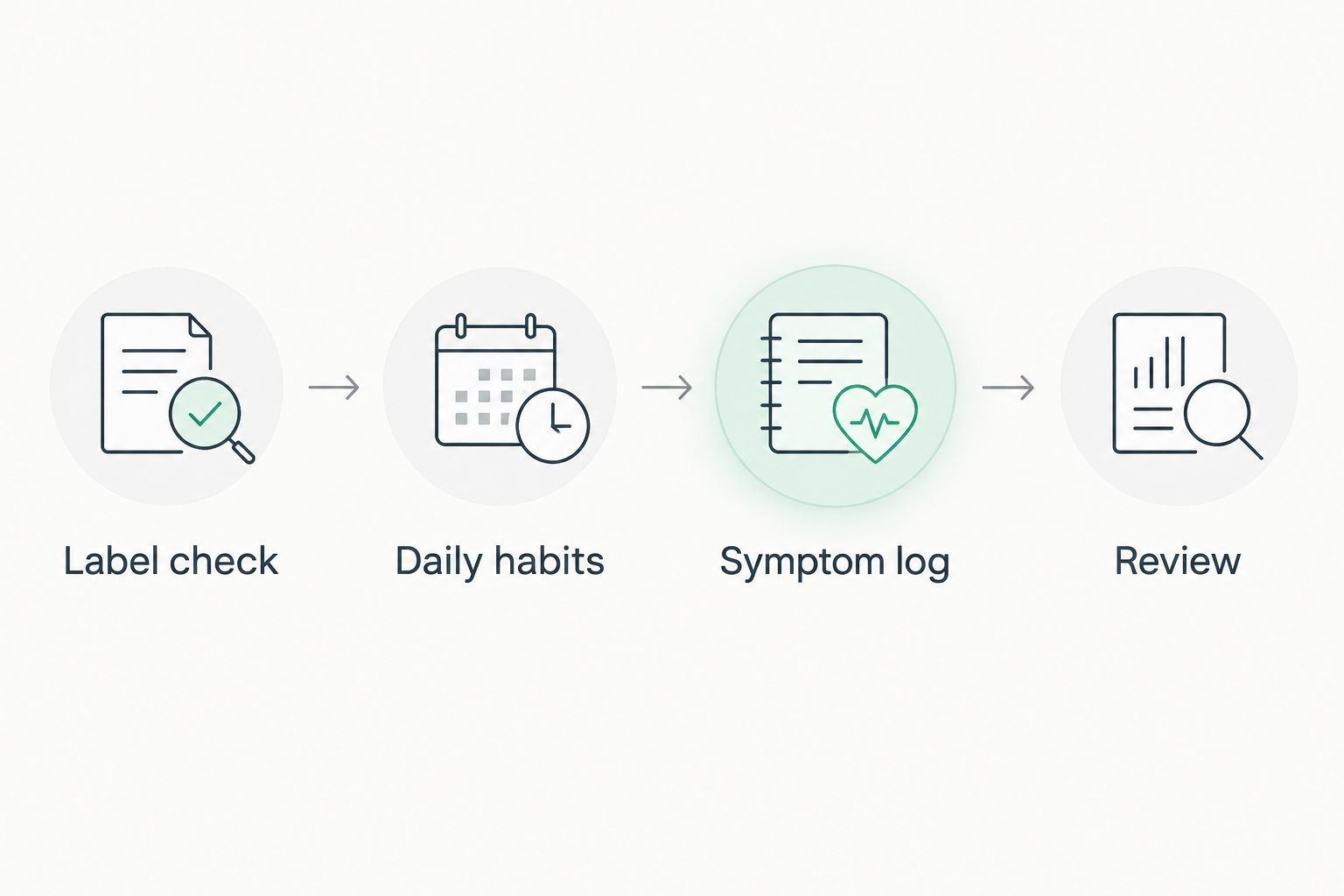
Build the routine around actions you can repeat without continually changing products. Keep four headings in your record: Label check, Daily habits, Symptom log, and Review. These are your own tracking labels, not settings in a required app.
Configure meals, fiber, and fluids
- Choose regular meal opportunities. Use a schedule that fits your day rather than skipping food to make a cleanse feel more intensive. Include familiar foods you tolerate.
- Review fiber sources. Look for vegetables, fruit, beans, and whole grains in your usual meals. Increase fiber gradually; a sudden jump can cause gas and bloating.
- Use a benchmark, not a challenge. The National Academies' dietary reference framework uses 14 grams of fiber per 1,000 calories. This is a general planning reference, not a requirement to force extra fiber during abdominal pain or an instruction to count every meal.
- Make drinks accessible. Drink regularly and follow any clinician-directed fluid restriction. Avoid imposing a universal gallon target; fluid needs and medical restrictions differ.
Expected result: Your meals contain repeatable fiber sources, and fluids are easy to access. You are not compensating for missed meals with a supplement or forcing water beyond your medical guidance.
Configure movement and bathroom timing
- Attach movement to an existing habit. Walk after a meal or use another activity suited to your abilities. Start from your current capacity rather than turning the cleanse into an exercise challenge.
- Keep general activity guidance in perspective. U.S. physical activity guidance for adults includes at least 150 minutes of moderate-intensity activity per week, plus muscle-strengthening activity on 2 days per week. These are general health goals, not an Oxy-Powder protocol or a guaranteed constipation treatment.
- Protect an unhurried bathroom opportunity. Try a consistent time, such as after breakfast, and respond when you feel the urge. Do not force a bowel movement or keep straining to satisfy a tracking goal.
- Keep access practical. If work or travel regularly interrupts bathroom access, plan around those constraints. A routine that ignores your schedule will be difficult to maintain.
Expected result: You have a realistic movement plan and a predictable bathroom opportunity. Success is comfortable function, not meeting an arbitrary daily stool count.
Tracking and review
Record only what changes a decision
- Log product use accurately. Record the amount and timing actually taken, following the applicable directions. Keep this separate from meals and other supplements so you can see overlaps.
- Describe the bowel movement. Note whether stool was hard, formed, loose, or watery, and whether passing it involved pain or straining. Plain language is sufficient.
- Record relevant symptoms. Include bloating, urgency, cramps, dizziness, or nausea. Do not relabel an unpleasant symptom as detoxification.
- Review the pattern before changing anything. Look for symptoms that persist, worsen, or repeatedly follow product use. Bring that record to a clinician rather than escalating the dose yourself.
Expected result: Your record distinguishes a comfortable bowel movement from diarrhea and shows what happened alongside product use. It does not claim to prove cause and effect.
A useful 2026 tracking note is brief: what you took, what happened, and what needs attention. Avoid turning the record into a scorecard for how thoroughly you believe you have cleansed.
Keep the foundation stable
Keep ordinary meals, appropriate fluids, and manageable activity consistent while you evaluate a product. Changing several supplements, your diet, and your workout simultaneously makes the experience harder to interpret.
Do not add a probiotic, mineral supplement, or second cleanser automatically. Each addition needs its own reason and safety review. More products create more decisions without necessarily resolving the original symptom.
Travel or schedule-change variant
Maintain habits without restarting a cleanse
Travel and shift changes can disrupt eating, drinking, movement, and bathroom access. Use this adjacent workflow when the schedule changes; do not assume disruption creates a need for another cleanse.
- Carry the original packaging. If you are using the product, keep the current directions and warnings accessible. Avoid relying on an unmarked container and memory.
- Preserve familiar meals where practical. Choose tolerated fiber-containing foods rather than suddenly increasing fiber before a long journey.
- Plan access to drinks and bathrooms. Account for your route, work shift, and any medical fluid restrictions. Do not deliberately dehydrate yourself to avoid bathroom stops.
- Keep movement realistic. Break up prolonged sitting when practical and resume your usual activity when your schedule permits.
- Return to the baseline routine. After the disruption, restart your ordinary habits—not an intensified product schedule.
Expected result: The routine survives a changed setting without adding an unsupported dose or extending product use beyond its directions.
For a 2026 travel checklist, write down logistics rather than promised health outcomes. Knowing where your water bottle and bathroom access are is actionable; declaring that travel requires detoxification is not.
Troubleshooting
Loose stools or urgent bathroom trips
Do not interpret diarrhea as a successful cleanse. Stop the cleanse and contact a clinician or pharmacist for advice, particularly if symptoms continue. Seek prompt care for dizziness, fainting, very little urination, or inability to keep fluids down.
Do not add another product to counteract the first without advice. Keep the bottle and your symptom record available when you call.
Bloating after increasing fiber
Slow the increase rather than forcing the target. A rapid dietary change can cause gas and discomfort. Review the foods and portions you recently added, and discuss persistent symptoms with a clinician.
Severe pain, vomiting, or abdominal swelling with inability to pass gas is not routine fiber adjustment. Seek medical evaluation.
No improvement despite repeated cleanses
Stop repeating the same experiment and arrange an assessment. Persistent constipation can have dietary, medication-related, or medical causes. A supplement cannot determine which cause applies to you.
Bring the symptom log and a complete medicine and supplement list. Include products you use only occasionally; they still matter to the review.
Missed product use or an unclear schedule
Do not double the next amount to catch up. Consult the current label or ask a pharmacist what to do. A missed entry in your routine is not a reason to intensify a cleanse.
More than one wellness product in the routine
Review the full combination before adding anything else. Check ingredients and warnings across all products, including powders, capsules, and occasional constipation remedies. Different names do not guarantee different effects.
Customize your workflow
Expand the routine by making ordinary habits easier—not by continually adding cleansers. Prepare tolerated fiber-containing foods, make drinking water convenient, and choose movement you can sustain.
If water access is the practical barrier, the AquaTru to daily drinking water setup workflow covers a separate household task. Water-treatment equipment does not establish a need for a cleanse or change a clinician's fluid restriction.
If you are comparing EWOT supplements, distinguish the product description from evidence relevant to your own symptoms. Keep treatment decisions with a qualified healthcare professional, especially when symptoms persist.
FAQ
Can I take Oxy-Powder every day as a detox routine?
Do not turn Oxy-Powder into indefinite daily use without checking the current label and obtaining individual medical advice. A cleanse does not establish that toxins are being removed, and ongoing bowel symptoms need assessment.
How many Oxy-Powder capsules should I take?
Use the directions on your current bottle and any individualized instructions from your clinician. A bottle's capsule count is not a dose, and this workflow does not supply an alternative dosing schedule.
What should I do after finishing an Oxy-Powder cleanse?
Return to consistent meals, appropriate fiber and fluids, regular movement, and an unhurried bathroom routine. Do not automatically repeat the cleanse or add another supplement.
Does diarrhea mean Oxy-Powder is removing toxins?
No, diarrhea does not demonstrate toxin removal. Stop the cleanse and seek medical advice if diarrhea persists or occurs with dizziness, reduced urination, significant pain, or other concerning symptoms.
Should I combine Oxy-Powder with a probiotic or another cleanse?
Do not combine products automatically. Ask a pharmacist or clinician to review the ingredients, medication interactions, and reason for each addition.
Do I need to have a bowel movement every day?
No, a daily bowel movement is not a universal requirement for healthy bowel function. Pay attention to changes from your usual pattern, hard stools, straining, pain, and persistent symptoms rather than chasing a fixed count.
When should I see a doctor instead of doing another cleanse?
Seek assessment for persistent constipation or a lasting change in bowel habits. Severe abdominal pain, vomiting, blood in the stool, black tarry stool, or abdominal swelling with inability to pass gas needs prompt medical evaluation.
One last thing
The best endpoint is a routine that does not depend on repeating a cleanse. For your 2026 review, ask whether bowel movements are comfortable and the habits are sustainable—not whether you can feel a product working.
Keep the product label and your symptom record together. That pairing gives a clinician something useful to assess when a routine needs changing.
